

 English
 Deutsch
 عربى
A small hardware component can play an important role in products that require convenient attachment, connection, and release. The carabiner is a good example. Its familiar shape and movable gate make it useful across outdoor equipment, industrial accessories, bags, ropes, and various hardware assemblies. Although its structure looks simple, material selection, forming methods, and gate construction all influence its performance and intended use.
Understanding the Basic Structure
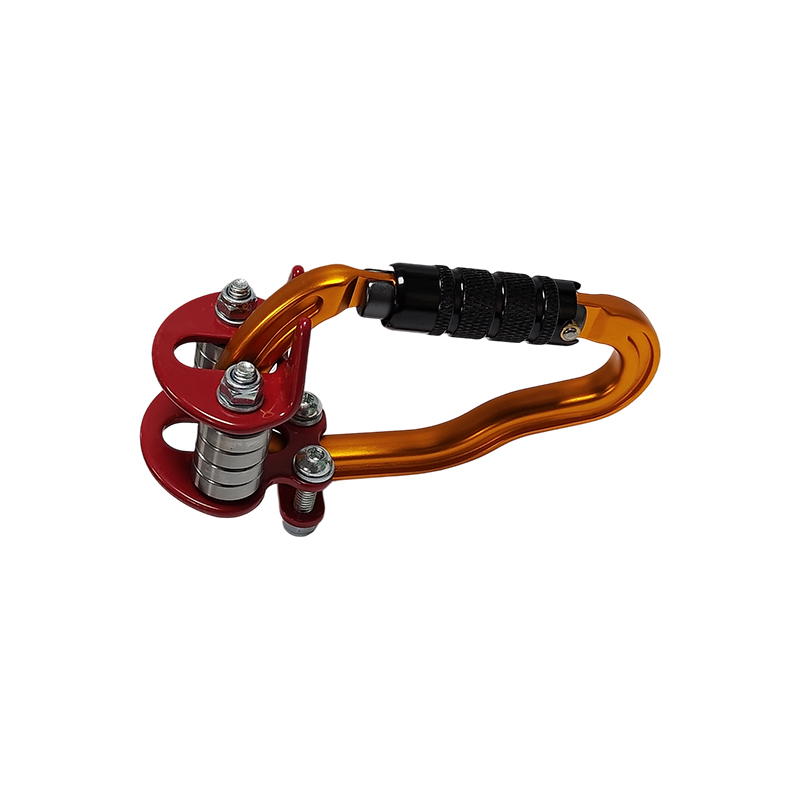
A typical Carabiner consists of a main body and a movable gate. The body forms the overall frame, while the gate opens to allow an item to pass through and closes to create a connection point. Depending on the design, the gate may use a spring mechanism to return to its closed position.
Different shapes serve different functional purposes. Oval designs offer a balanced appearance and symmetrical loading geometry. D-shaped models provide a more directional structure, while pear-shaped versions have a wider opening area that can accommodate certain connection arrangements.
Gate construction is another important design feature. Straight gates have a simple operating structure, while curved gates can provide additional clearance when attaching equipment. Screw-lock and automatic-lock mechanisms are also available for products requiring different operating methods.
Material Selection Shapes Product Characteristics
Metal selection has a direct influence on the weight, appearance, and mechanical characteristics of finished hardware.
Aluminum alloy is commonly used when a lightweight structure is preferred. It can be formed into different shapes and finished in various colors, making it suitable for equipment accessories and consumer hardware products.
Stainless steel offers a different combination of properties. Its metallic appearance and corrosion resistance make it useful for marine accessories, architectural hardware, and industrial connection components. It is also available in different surface finishes according to product requirements.
Carbon steel is another material option for applications that require a different balance of mechanical properties and manufacturing costs. Surface treatments can be selected to achieve particular appearance requirements.
For buyers comparing materials, the intended working conditions, component dimensions, and required mechanical characteristics should be considered together rather than evaluating material names alone.
How Manufacturing Processes Shape the Final Product
Producing a metal Carabiner involves several manufacturing stages. The selected process depends on the material, product structure, dimensions, and expected application.
Metal forming is used to create the main body shape. Depending on the design, manufacturers may use wire forming, stamping, forging, or other suitable processing methods. Each method has its own production characteristics and is associated with different structural requirements.
After forming, additional operations may include cutting, drilling, machining, and surface finishing. These processes help establish the component's final dimensions and appearance.
Gate production involves a separate set of operations. The gate must fit the body structure and allow smooth movement. Spring components and locking parts are assembled according to the selected design. The relationship between the gate and the main frame is particularly important because it affects how the component opens and closes.
Surface finishing takes place according to the material and appearance specifications. Options may include polishing, anodizing for suitable aluminum products, plating, and powder coating.
Customization in Hardware Manufacturing
Product customization allows manufacturers to respond to different requirements from equipment brands, distributors, and industrial buyers.
A customized Carabiner may differ in body shape, opening dimensions, gate configuration, material, color, and surface treatment. Buyers may also request engraved logos, laser markings, or customized packaging to support their own product lines.
For projects involving multiple product models, clear technical drawings and sample references can help manufacturers understand the required dimensions and structural details. Communicating the intended use is also useful when discussing material selection and product configuration.
OEM and ODM cooperation can cover individual components as well as complete hardware product ranges. Manufacturers may adjust existing designs or develop new structures based on buyer specifications.






 3rd Floor, Comprehensive Building, No. 1 Huimin Road, Nanmingshan Street, Liandu District, Lishui City, Zhejiang Province
 +86 15325130332

