

 English
 Deutsch
 عربى
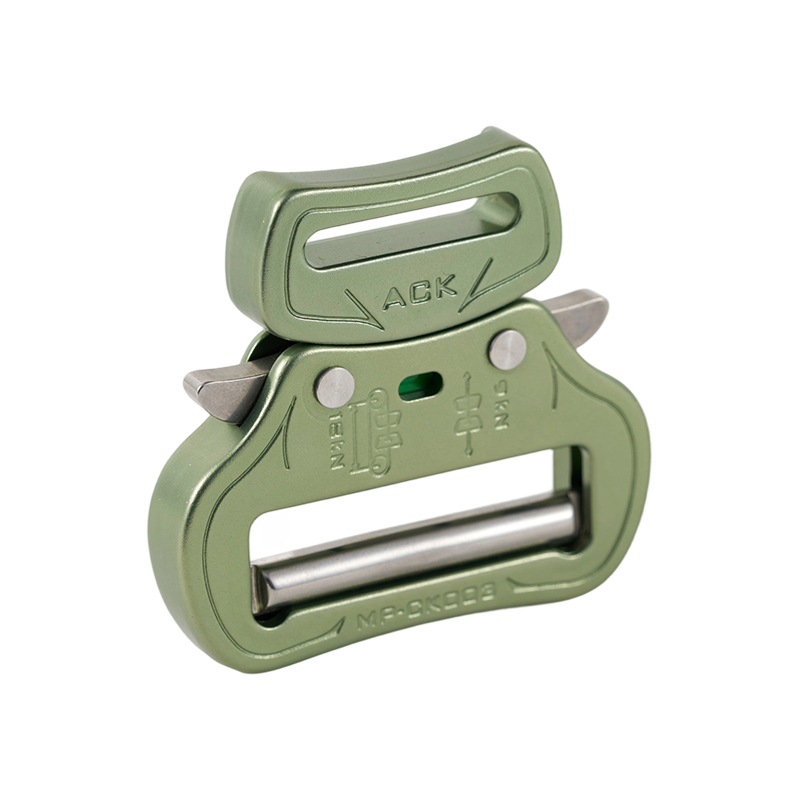
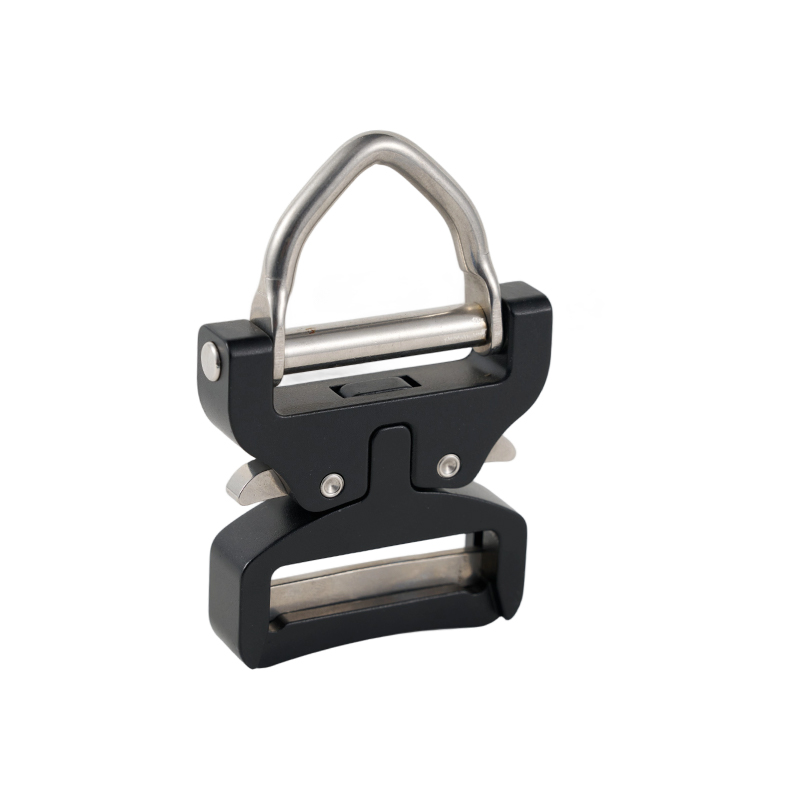
عربىHanging buckle hardware appears across outdoor equipment, pack systems, and simple attachment points where a secure yet quick connection is needed. These components combine a body and a gate or door that opens and closes to capture webbing, loops, or small gear items. Materials range from aluminum alloys and stainless steel to reinforced plastics, each chosen for weight, strength, and resistance to everyday wear.
Core Structure and Material Choices
A typical hanging buckle starts with a solid body that forms the main load path. One end of the body hinges to a movable door. The opposite end features a clamping or locking surface. Small blocks or ridges on the body match corresponding holes or slots in the door. When the door closes, those blocks seat firmly and create a positive lock. This arrangement spreads force across multiple contact points rather than relying on a single spring or pin.
Aluminum versions keep weight low while still offering solid tensile capacity for light-to-moderate loads. Stainless steel versions add corrosion resistance for damp or salty environments. Plastic versions, often molded from durable polymers, serve lighter applications such as bottle carriers or soft-goods attachments. In all cases the goal remains the same: a dependable connection that opens and closes without tools.
Common Applications in Field Use
Outdoor workers and recreational users rely on hanging buckle pieces to free their hands. One frequent setup involves clipping a water bottle holder to a belt or pack strap. The buckle grips the bottle neck or a dedicated sleeve while the opposite side attaches to webbing. Hikers, climbers, and job-site crews keep hydration within easy reach without stuffing bottles into already full packs.
Pack and harness systems also benefit. A hanging buckle can secure spare gloves, a small tool pouch, or a rolled jacket to an external loop. The gate opens wide enough for thicker webbing yet closes tightly enough to prevent rattle or slippage. Because the hardware stays lightweight, it adds little bulk to a fully loaded setup.
Installation and Everyday Operation
Attaching a hanging buckle is straightforward. Users select a location on belt, pack strap, or fixed loop, open the gate, pass the webbing through, and close the gate until it clicks. The clamping surface holds the strap at the chosen position. Adjustment is simple: open the gate, slide the strap, and close again. No knots or extra hardware are required.
For bottle carriers the process is similar. The hanging buckle often includes a flexible band or rigid cradle that grips the bottle. Once the bottle sits in place, the buckle clips to the user’s belt or pack. The arrangement keeps the bottle upright and accessible while the hands remain free for other tasks.
Repeated open-and-close cycles are part of normal use. Quality designs maintain gate tension and alignment after many operations. The clamping blocks continue to seat cleanly, and the hinge shows minimal play. Users report consistent performance across daily shifts or multi-day trips when the hardware is matched to the expected load.
Matching the Right Style to the Task
Different tasks call for different proportions. Wider bodies accommodate thicker webbing common on packs and harnesses. Narrower versions suit belt loops or lighter straps. Gate geometry also varies: some open fully for easy threading, while others feature a partial opening that still captures the load securely.
Load direction matters. When the force runs along the long axis of the buckle, the design transfers weight efficiently into the body. Side loads are handled by the closed gate and the clamping interface. Selecting a hanging buckle whose strength rating matches the expected force keeps the connection stable under movement or sudden shifts.
Compatibility with existing webbing is another practical consideration. Most hanging buckle models accept common strap widths found on commercial packs and belts. Users can therefore integrate the hardware into current gear without replacing entire systems.






 3rd Floor, Comprehensive Building, No. 1 Huimin Road, Nanmingshan Street, Liandu District, Lishui City, Zhejiang Province
 +86 15325130332
