

 English
 Deutsch
 عربى
Understanding the Structure of Universal Double Pulleys
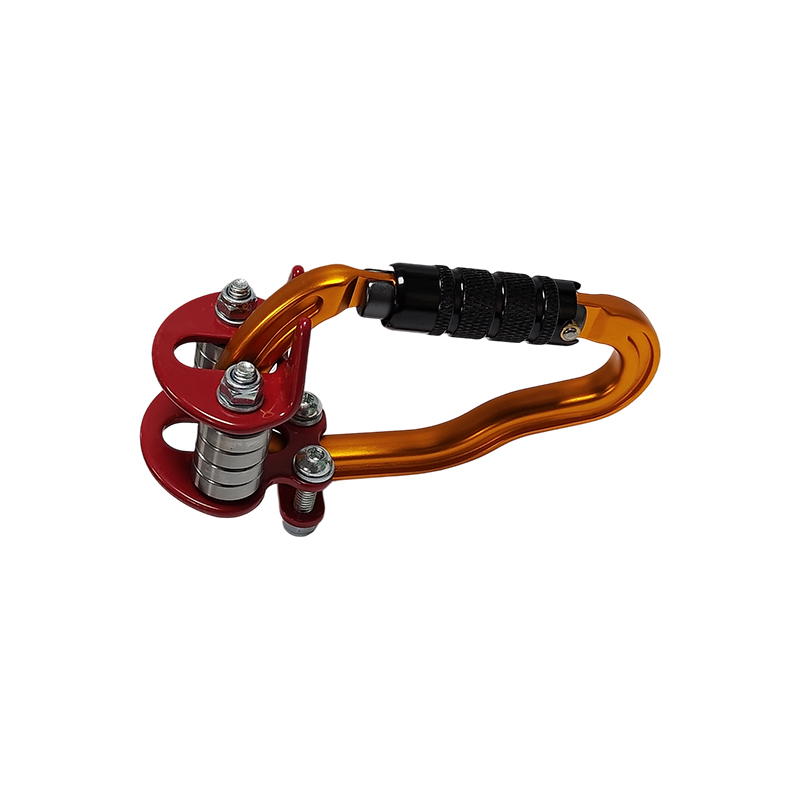
Rope routing and load handling are important considerations in lifting, rigging, and material handling operations. When a system needs to guide ropes through different paths or distribute mechanical force, pulley components can help create a more practical arrangement. Universal Double Pulleys are designed with two sheaves in one assembly, allowing ropes or lines to pass through separate channels within a compact structure.
Compared with a single-sheave pulley, a double pulley provides an additional rope path. This arrangement can support more complex rigging configurations and help users organize multiple lines within the same system. Depending on the design, the pulley may be used with ropes, cords, or compatible lines in industrial, outdoor, and equipment-related applications.
How Double Sheaves Influence Rope Routing
The two sheaves are the central components of Universal Double Pulleys. Each sheave guides a rope along a defined path, while the surrounding frame keeps the components positioned within the assembly.
This structure can help reduce the need for separate pulley housings when two rope paths must be arranged close together. It may also make the overall rigging layout easier to organize in applications where space is limited.
When evaluating a double pulley, users can consider several structural details:
- Sheave configuration: The diameter, groove shape, and spacing influence how ropes move through the pulley.
- Frame design: The frame affects attachment options, structural support, and the space required for installation.
- Material selection: Metal and engineered polymer components offer different combinations of strength, weight, and resistance to operating conditions.
These details determine whether a particular pulley suits the intended rope system. A universal design should not be assumed to fit every rope or load without checking the product specifications.
Selecting Universal Double Pulleys for Different Systems
Choosing Universal Double Pulleys involves more than comparing their external dimensions. The working load, sheave size, and rope compatibility all affect how the component performs within a complete system.
Sheave diameter is particularly relevant because it influences the bending radius of the rope. A pulley groove that does not match the rope diameter may cause poor tracking or uneven contact. Users should also consider whether the sheaves rotate independently or share a particular structural arrangement, as this can affect the intended routing configuration.
Attachment design is another consideration. Some pulley assemblies use fixed attachment points, while others incorporate moving connections or compatible connectors. The mounting method should suit the surrounding equipment and keep the pulley aligned with the rope path.
Before selecting a model, technical teams can review the following details:
- Rated working load and applicable load configuration.
- Compatible rope diameters and groove dimensions.
- Sheave material, frame construction, and attachment style.
- Available installation space and required rope direction.
These checks help narrow the available options and reduce the risk of choosing a component that does not fit the intended setup.
Why Universal Double Pulleys Matter in Equipment Design
In equipment design, individual components influence how the complete system is arranged. Universal Double Pulleys provide two sheaves in a single assembly, which can help consolidate rope-guiding functions and make certain layouts easier to configure.
For manufacturers and equipment integrators, the suitability of a pulley depends on its role within the mechanical system. A component intended for light-duty line guidance may have different structural requirements from one designed for industrial load handling. Clear specifications are therefore important when comparing products from different suppliers.
Universal Double Pulleys are not interchangeable across every application, but their dual-sheave structure offers practical flexibility in compatible rope systems. By evaluating construction, load ratings, rope dimensions, and mounting requirements together, users can identify a pulley configuration that matches the equipment's operating needs.






 3rd Floor, Comprehensive Building, No. 1 Huimin Road, Nanmingshan Street, Liandu District, Lishui City, Zhejiang Province
 +86 15325130332

