

 English
 Deutsch
 عربى
عربىWhat Makes a Carabiner Different From a Simple Metal Clip?
At a glance, a carabiner looks like a straightforward piece of hardware — a metal loop with a spring-loaded gate. But the design carries more engineering than it lets on. Unlike a basic clip, a carabiner is built to hold load along its spine while the gate stays free to open and close for quick attachment, which means the strength rating and the gate mechanism have to work together without compromising each other.
Shape plays a bigger role than people expect. Oval carabiners distribute load evenly and are common for pulley systems, while D-shaped and offset D versions shift more of the load toward the spine, away from the gate, which tends to keep the connection more secure during dynamic movement. Asymmetric shapes go a step further, reducing weight while maintaining a similar strength profile, which is part of why they show up often in lightweight climbing setups.
How Does a Carabiner Gate Actually Work Under Load?
Gate type is one of the first things buyers notice when comparing carabiner options, and it usually falls into a few main categories: straight gate, bent gate, wire gate, and locking gate. Straight and bent gates are common on standard non-locking carabiners, with bent gates often used specifically for clipping into rope quickly during lead climbing. Wire gates reduce overall weight and tend to resist ice buildup better than solid gates, which matters for climbers working in colder conditions.
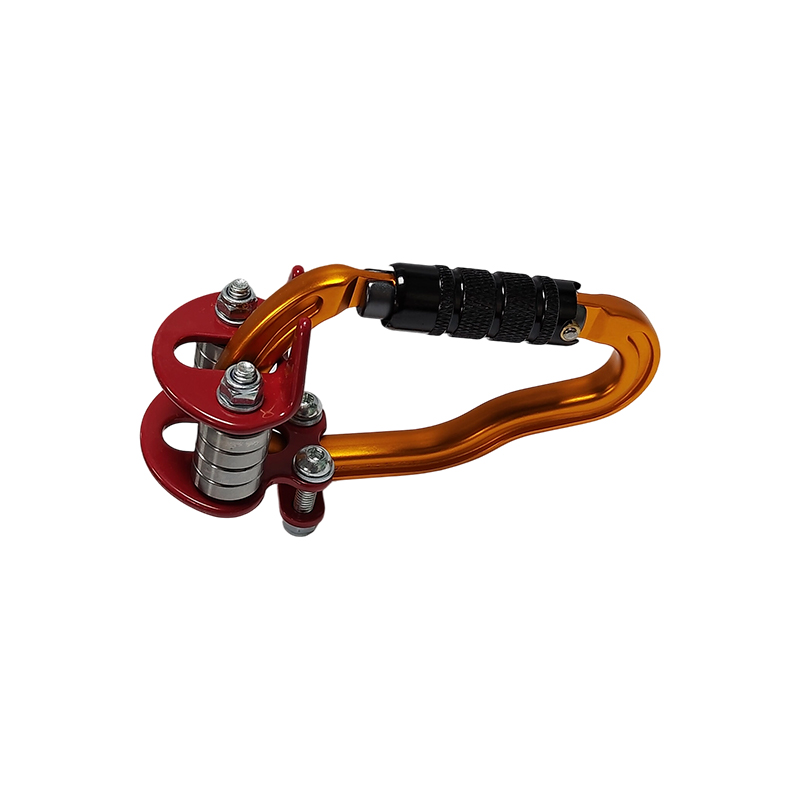
Locking mechanisms add another layer of function for situations where accidental gate opening would be a serious problem. Screw-lock designs require manual twisting to secure, while auto-locking versions close on their own once released. Some manufacturers offer double or triple-action locking gates that require more than one motion to open, adding a layer of resistance against accidental unlocking during use.
A quick breakdown of common gate types:
- Straight gate: simple, common for general clipping
- Bent gate: curved profile, often paired with straight-gate carabiners on quickdraws
- Wire gate: lighter weight, resists ice buildup
- Locking gate (screw or auto): added security for critical connection points
What Should Buyers Check Before Sourcing Carabiner Products in Bulk?
Buyers sourcing carabiners for retail or industrial distribution typically start by narrowing down intended use, since climbing-rated and general-purpose hardware carabiners are built to very different specifications. A carabiner meant for technical climbing needs a rated strength along its major and minor axes, along with gate-open strength, while a utility carabiner used for general rigging or gear attachment may not require the same level of testing.
Material choice also shapes the sourcing decision. Aluminum carabiners are lighter and common in climbing and outdoor gear lines, while steel versions offer more mass and are often chosen for industrial rigging or repeated heavy-load applications. Buyers stocking both markets sometimes request samples in each material to compare weight, finish, and gate action side by side before committing to a larger order.
Can a Carabiner Handle Both Climbing and Industrial Rigging Use?
This is a common question from buyers unfamiliar with how differently these two markets treat the same basic hardware shape. Climbing-rated carabiners go through specific testing standards tied to dynamic loads and fall scenarios, since the equipment needs to perform reliably during sudden, sharp forces. Industrial rigging carabiners, by contrast, are often rated for static or working loads rather than dynamic impact, which changes how the metal is shaped and reinforced internally.
Using a carabiner outside its intended category isn't generally recommended, since the two rating systems aren't interchangeable in practice even when the physical size looks similar. Suppliers working across both markets typically keep clear labeling and separate product lines to avoid confusion between climbing-grade and general-purpose rigging hardware, since mixing up the two can lead to a mismatch between what a buyer expects and what the equipment is actually built to handle.






 3rd Floor, Comprehensive Building, No. 1 Huimin Road, Nanmingshan Street, Liandu District, Lishui City, Zhejiang Province
 +86 15325130332
