

 English
 Deutsch
 عربى
عربىAnatomy of a Tiny Guardian
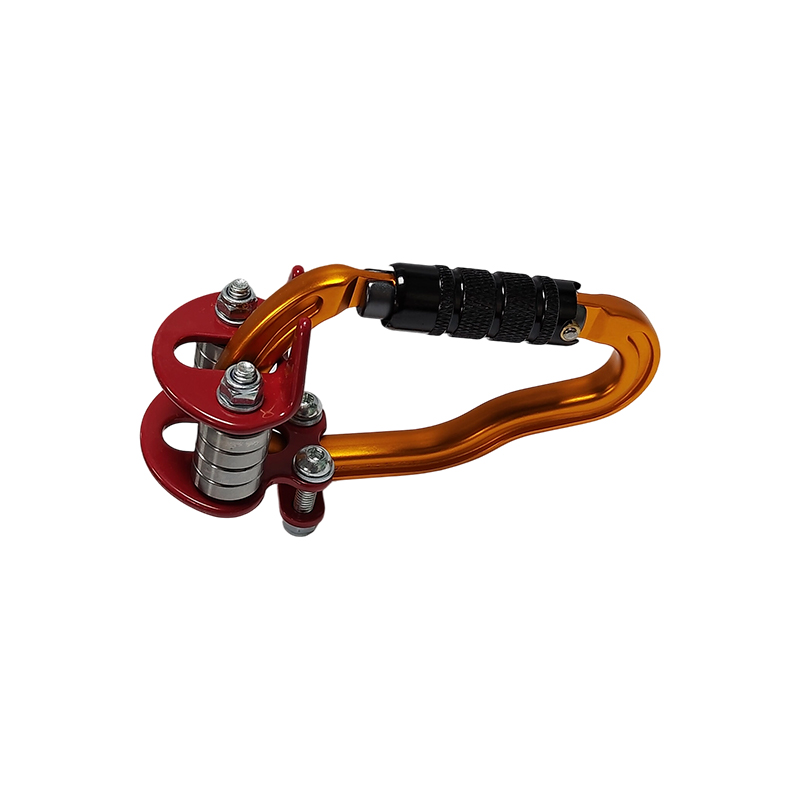
Look closely at a safety hook, and its design reveals thoughtful engineering. The curved body distributes force evenly along its arc, avoiding stress points that could crack under load. The gate — the spring-loaded arm that snaps closed — keeps the hook captive on whatever it grasps.
A small latch mechanism prevents the gate from opening accidentally, even when the hook bumps against a beam or wall. Some designs add a locking sleeve that must be twisted or pressed before the gate opens at all. These details separate a genuine safety hook from a simple carabiner bought at a hardware store.
Forged, Not Bent
Manufacturers shape safety hooks through forging — heating steel until it glows, then pressing it into dies under enormous force. Forging aligns the metal's internal grain with the hook's curves, giving the finished piece remarkable toughness.
After forging, hooks undergo heat treatment, quenching, and tempering to reach their final strength. Every hook carries stamped markings indicating its working load limit, and inspectors check each batch before shipping. A single flawed hook could fail catastrophically, so quality control leaves no room for shortcuts.
Where Safety Hooks Earn Their Keep
Climbers clipping into ropes trust safety hooks with every ascent. Construction workers attach lanyards to anchor points far above the ground. Warehouse crews sling them into lifting slings, trusting the hook to carry engines, machinery, and structural steel.
Sailors snap them to lifelines when working on pitching decks. Window washers, tree surgeons, and wind turbine technicians all rely on the same curved piece of steel. Different industries, different dangers — one shared dependence.
The Click Everyone Listens For
Experienced users develop an ear for the sound. A proper snap means the gate has closed fully and the latch has engaged. A dull or incomplete click demands immediate attention.
Rigging crews teach newcomers to check gates every time, running a thumb across the mechanism before trusting a connection. Mountain guides do the same at every anchor point. That tiny sound — click, snap, secure — represents the final step in a safety ritual repeated millions of times daily around the world.
Choosing the Right Hook for the Job
Safety hooks come in shapes suited to different tasks. Oval hooks work well with pulleys and allow multiple attachments. D-shaped hooks shift load toward the spine, their strongest axis. Pear-shaped designs offer wide gates for attaching thick ropes or multiple slings.
Steel suits heavy industrial lifting and high-wear environments. Lighter alloys serve climbers and rope-access technicians who count every gram. The key lies in matching the hook to its intended use — and never guessing about load limits.
Small Habits, Big Consequences
Inspectors recommend checking safety hooks before each use: scan for cracks, distortion, or gate damage. Drops onto hard surfaces can hide internal damage invisible to the eye. Dirt and grit demand cleaning, since debris can jam gate mechanisms.
Users retire hooks after any significant impact or when wear shows on the gate or body. These habits cost little time but preserve the trust placed in every connection.





 3rd Floor, Comprehensive Building, No. 1 Huimin Road, Nanmingshan Street, Liandu District, Lishui City, Zhejiang Province
 +86 15325130332
