

 English
 Deutsch
 عربى
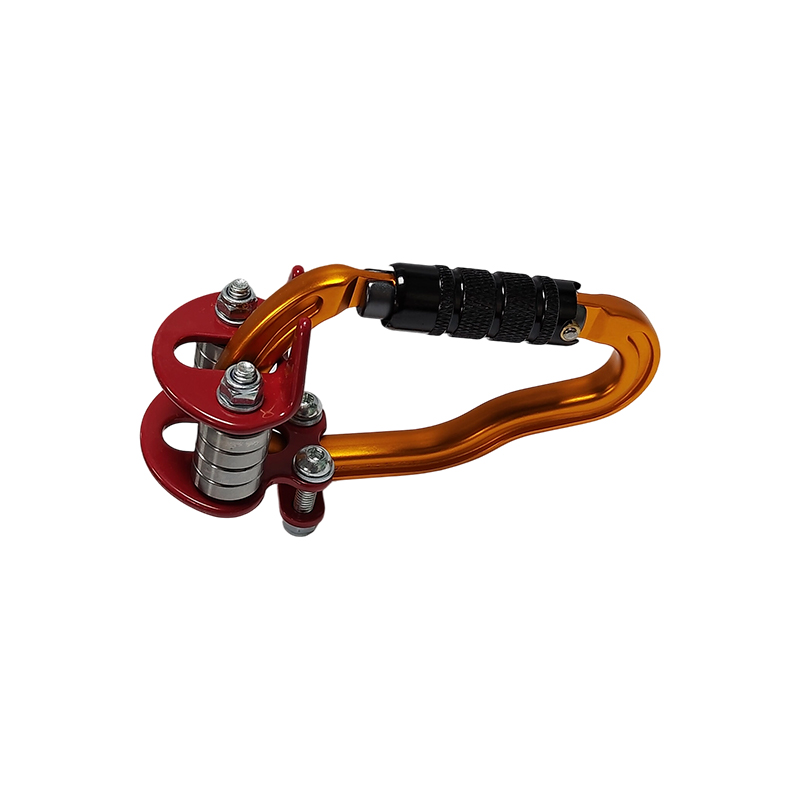
عربىA carabiner is a metal loop featuring a spring-loaded gate, designed to allow quick and secure attachment of ropes, straps, or other equipment. Traditionally made using steel due to strength, modern versions often use aluminum alloys to reduce weight and maintain structural integrity. This balance between durability and portability has played a major role in wider adoption across climbing, travel gear, industrial equipment, camping accessories, rescue systems, and daily utility products.
In outdoor environments, especially climbing and hiking, the carabiner serves as a critical connection point. Climbers rely on it to link harnesses, anchors, and ropes in a system that must remain reliable under dynamic stress. Over time, design improvements have focused on gate mechanisms, locking systems, and shape optimization. Screw-lock, twist-lock, and magnetic locking designs have all emerged to reduce the risk of accidental opening during use.
Manufacturers have also explored variations in shape, such as D-shaped and oval carabiners, each offering different load distribution characteristics. These subtle differences can influence how force travels through the device, making it more suitable for specific tasks. For example, asymmetrical designs often help direct load toward the spine of the carabiner, where strength is concentrated.
Beyond climbing, the carabiner has become common in daily utility products. Many people attach them to backpacks, key rings, water bottles, or travel gear. This everyday usage is driven by convenience rather than technical necessity, but it still benefits from the same engineering principles found in professional-grade equipment. The ability to quickly clip and unclip items has made it a practical tool in urban environments as well.
Material science has also influenced recent developments. Aluminum alloys provide a strong yet lightweight option, while stainless steel variants are favored in environments exposed to moisture, chemicals, or abrasion. Some manufacturers are experimenting with composite coatings to improve corrosion resistance and extend product lifespan. These advancements reflect ongoing efforts to balance performance with long-term reliability.
Design innovation has not been limited to strength alone. Ergonomics plays a growing role in how carabiners are shaped and used. Gate openings have been refined to allow smoother operation with one hand, even while wearing gloves. This is particularly relevant in cold-weather climbing or rescue scenarios, where fine motor control may be reduced.
Safety remains a central concern across all applications. Even small improvements in locking mechanisms can significantly reduce the chance of accidental disengagement. As a result, many modern designs incorporate visual indicators that show whether the gate is properly secured. This helps users quickly verify connection status without needing to apply additional force or inspection time.
Even within recreational use, variations continue to grow. Decorative carabiners are now seen in fashion accessories, while specialized versions are designed for specific sports such as kayaking or cycling. Each adaptation maintains the core principle of quick attachment while tailoring features to different user needs.
Further improvements in carabiner design are likely to focus on material efficiency, safety assurance, and usability. While the basic concept has remained consistent for decades, the ways in which it is applied continue to diversify. This combination of simplicity and adaptability explains why the carabiner remains relevant across so many industries and everyday situations.







 3rd Floor, Comprehensive Building, No. 1 Huimin Road, Nanmingshan Street, Liandu District, Lishui City, Zhejiang Province
 +86 15325130332
