

 English
 Deutsch
 عربى
عربىA carabiner may look like a simple metal clip, but its compact design has made it a familiar tool in climbing, hiking, camping, travel, and everyday gear organization. With a curved body and spring-loaded gate, a carabiner allows users to connect items quickly and separate them with a simple hand movement.
What Is a Carabiner?
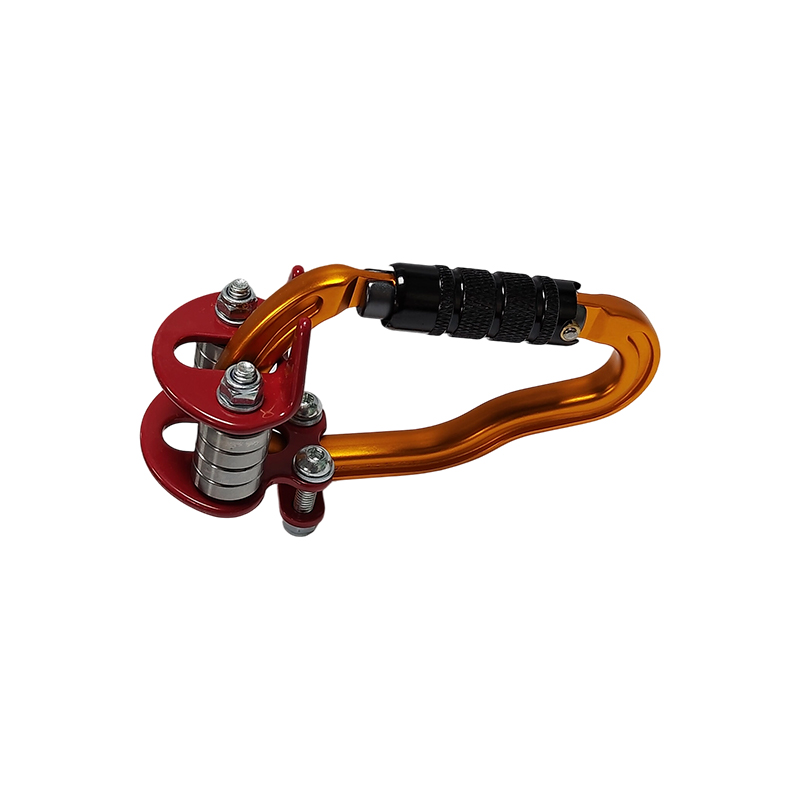
A carabiner is a connector built around a metal loop and a movable gate. The gate opens to let a rope, strap, ring, or other compatible item pass through. When released, the spring mechanism brings the gate back toward the closed position.
The basic concept is simple, yet small design differences can change how a carabiner feels and performs. Shape, gate opening, weight, locking mechanism, and body construction all influence the way users handle the connector.
For this reason, choosing a carabiner usually starts with understanding its intended application rather than simply looking at its appearance.
Common Carabiner Designs
One common distinction is between locking and non-locking carabiners.
A non-locking carabiner uses a spring-loaded gate without an additional locking sleeve. This design allows quick clipping and is often seen in gear organization and climbing setups where quick access is useful.
A locking carabiner adds a mechanism that helps secure the gate. Screw-lock and automatic-lock designs are two familiar examples. These models are often selected for applications where users want an additional level of gate security.
Wire-gate carabiners use a bent section of wire as the gate. This design can reduce weight and provides a different handling experience compared with traditional solid-gate models.
Carabiner Materials and Shapes
Aluminum and steel are common materials used in carabiner construction. Aluminum models are often associated with lightweight outdoor equipment, while steel designs can be selected for applications where a heavier and more substantial connector is suitable.
The shape also matters. D-shaped designs can offer a straightforward connection point, while oval and HMS-style designs are used for different equipment arrangements.
These differences may seem small, but they can affect how ropes, straps, and other equipment sit inside the connector.
Everyday Uses for a Carabiner
Outside technical climbing, the carabiner has become a useful everyday accessory.
A small carabiner can attach a water bottle to a backpack, keep keys together, connect a pouch to a bag, or organize lightweight camping equipment. Travelers may also use carabiners to keep small accessories in one place.
For these everyday applications, accessory carabiners are generally designed for organization rather than load-bearing activities. Their compact size and easy operation make them convenient for routine gear management.
Choosing the Right Carabiner
The right carabiner depends on what it needs to connect and how it will be used. For lightweight organization, a simple accessory clip may be enough. For climbing or rope-based activities, users need equipment specifically designed for that application and should follow the manufacturer's intended-use information.
It is also useful to consider the gate style, body shape, material, size, and handling requirements before making a selection.
A carabiner is a small component, but its design can make a noticeable difference in how outdoor equipment is connected and organized. From climbing gear to everyday backpacks, this simple connector continues to have a practical role across many types of equipment.





 3rd Floor, Comprehensive Building, No. 1 Huimin Road, Nanmingshan Street, Liandu District, Lishui City, Zhejiang Province
 +86 15325130332
